

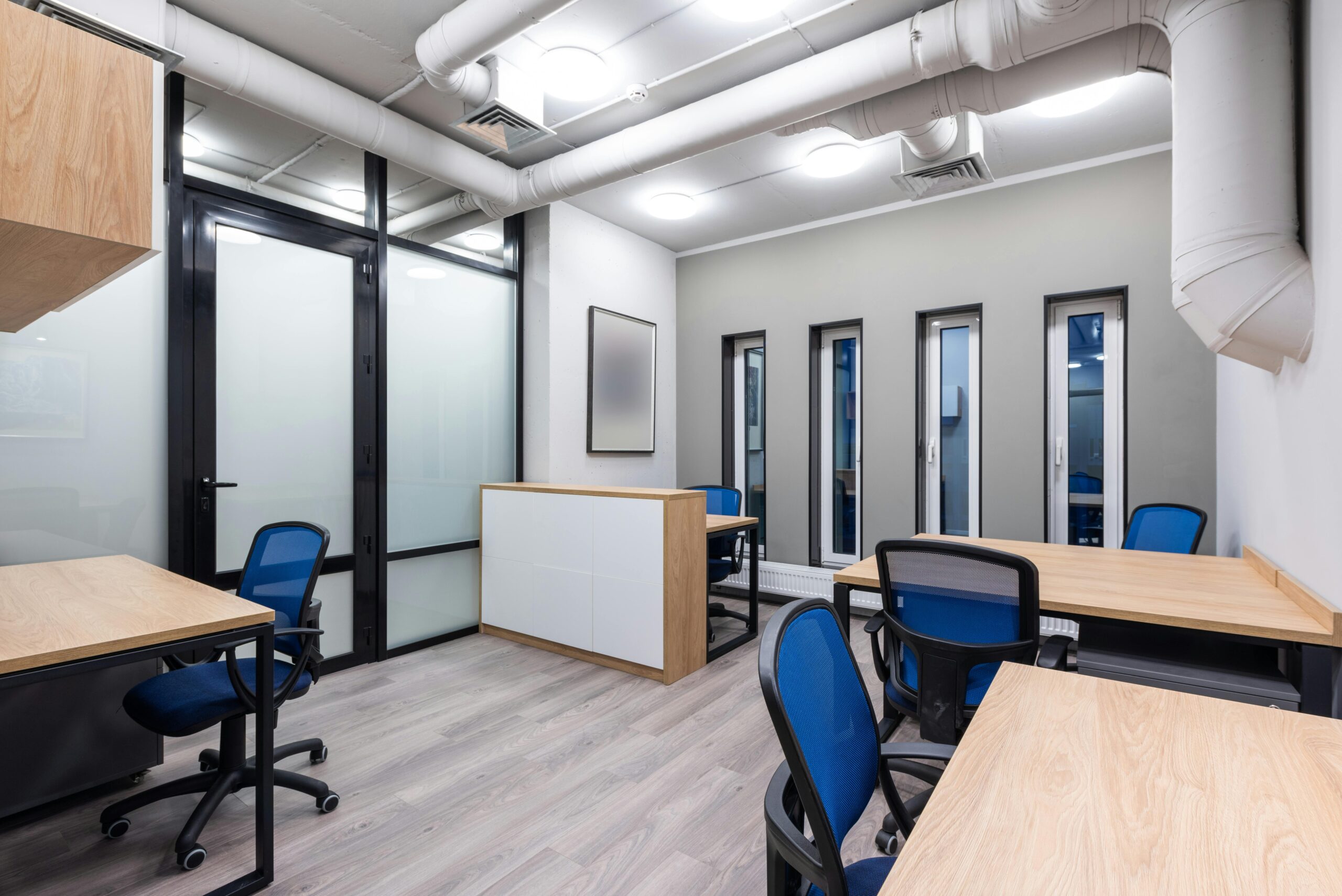
Can portable air cleaners help you reduce reliance on outdoor air ventilation?
17 June 2026
Key points
- Portable air cleaners can add recirculated clean air to a room, which may reduce the need to increase outdoor air ventilation in some situations.
- They should not normally be treated as a direct replacement for statutory ventilation requirements, especially where CO₂, moisture, odours or combustion gases need to be controlled.
- The useful comparison is not “ventilation or purification”, but total clean air delivery from outdoor air, filtration and air cleaning together.
- Clean Air Delivery Rate (CADR), room volume, occupancy, noise, placement and maintenance all affect real-world performance.
- Any reduction in outdoor air ventilation should be assessed carefully against building standards, pollutant sources, monitoring data and risk.
Introduction
Portable air cleaners are often discussed as a way to improve indoor air quality without making major changes to a building’s ventilation system. This is understandable. Bringing in more outdoor air can improve dilution, but it can also increase heating, cooling, humidity control and filtration demands, particularly in winter, summer or polluted urban locations.
The more useful question is whether portable air cleaners can provide additional clean air inside a room, allowing facilities teams to avoid unnecessary increases in outdoor air ventilation while still managing exposure to particles, some bioaerosols and, depending on technology, certain gases or VOCs.
The cautious answer is yes, in some circumstances. Portable air cleaners can support a lower-energy indoor air strategy, but they do not remove every reason for ventilation. Outdoor air is still needed to dilute CO₂, remove moisture, control odours and manage pollutants that air cleaners may not address. Building regulations and sector-specific guidance also continue to matter; in England, Approved Document F remains the statutory guidance for ventilation requirements intended to maintain indoor air quality.
What does “reducing reliance on outdoor air ventilation” actually mean?
Reducing reliance on outdoor air ventilation does not mean closing vents and asking an air purifier to do the work of a ventilation system.
A better definition is:
Reducing reliance on outdoor air ventilation means using filtration and air cleaning to provide part of the room’s total clean air requirement, so that outdoor air rates do not need to be increased beyond what is necessary for the specific building, occupancy and pollutant profile.
That distinction matters.
Outdoor air ventilation performs several functions:
- it dilutes indoor-generated pollutants;
- it helps manage CO₂ from occupants;
- it removes moisture and odours;
- it can reduce concentrations of airborne particles and some gases;
- it supports compliance with building and occupational requirements.
Portable air cleaners mainly recirculate indoor air through a treatment system. A HEPA-based unit physically captures particles. A combined HEPA and catalytic system may also be designed to address some gaseous pollutants, depending on the catalyst, airflow rate, contact time and test conditions.
So the question is not whether air cleaning replaces ventilation. It is whether air cleaning can provide additional equivalent clean air for the pollutants it can treat.
ASHRAE’s 2024 position document describes filtration and air cleaning as a potential alternative or supplement to exposure-reduction methods such as source control and outdoor air dilution, while also noting that technologies vary and that health-effect evidence is not uniform across all applications.
How do portable air cleaners add “clean air” to a room?
Portable air cleaners add clean air by drawing room air through a filter or treatment stage and returning treated air to the same space.
For particles, the key metric is Clean Air Delivery Rate, or CADR. CADR estimates the volume of particle-cleaned air delivered by the device per unit of time.
A simplified expression is:
Clean air from portable unit = CADR
Equivalent air changes per hour from portable unit = CADR ÷ room volume
For example, a portable air cleaner with a CADR of 500 m³/h used in a 100 m³ room provides:
500 ÷ 100 = 5 equivalent air changes per hour
This does not mean the room has received five air changes of outdoor air. It means the device is delivering particle-cleaned recirculated air at a rate equivalent to five room volumes per hour.
That distinction is central to good design.
Outdoor air ventilation changes the air by supplying air from outside and exhausting or displacing indoor air. Portable air cleaning treats and recirculates existing room air. Both can reduce the concentration of some airborne contaminants, but they do not address exactly the same pollutant mix.
When can portable air cleaners complement outdoor air ventilation?
Portable air cleaners are most useful where the main concern is airborne particulate matter, fine aerosols or particles associated with certain bioaerosols.
They may be particularly relevant in:
- rooms where the existing ventilation rate is difficult to improve quickly;
- spaces with intermittent high occupancy, such as meeting rooms or classrooms;
- buildings where additional outdoor air creates a high heating or cooling load;
- urban areas where outdoor air quality is variable;
- retrofit projects where ductwork changes are disruptive or costly;
- clinical or patient-related spaces where guidance allows appropriately specified HEPA devices as an additional measure.
NHS England guidance for healthcare spaces describes ventilation as an important line of defence for infection control and provides additional guidance for HEPA filter devices in healthcare and patient-related settings. It is aimed primarily at portable and semi-fixed devices, but it frames them as part of a wider ventilation and infection-control context rather than a casual substitute for engineered ventilation.
A similar principle applies outside healthcare. A portable air cleaner can help reduce particle concentrations if it is correctly sized, well placed, operated at an appropriate fan speed and maintained. It is less useful if the device is too small, too noisy to run continuously, placed in a corner with poor air mixing, or used with saturated filters.
REHVA’s guidance on room air cleaners highlights the need to consider CADR, noise, energy efficiency, placement, service and maintenance, operation and possible pollutant generation. That is a useful reminder: performance is not only about the filter media; it is also about the whole operating condition of the room.
What are the limits of substituting air cleaning for outdoor air?
Portable air cleaners have clear limits.
The first limit is CO₂. Most portable air cleaners do not remove carbon dioxide. If a room is occupied and outdoor air is reduced too far, CO₂ can rise even when particle levels are being controlled by filtration. CO₂ is not a complete measure of indoor air quality, but it is a useful indicator of ventilation adequacy in occupied spaces.
The second limit is moisture. Outdoor air ventilation helps manage humidity generated by occupants, cooking, washing, cleaning and building use. A portable air cleaner does not normally remove water vapour.
The third limit is pollutant specificity. HEPA filtration is designed for particles, not gases. Activated carbon can adsorb some gases and VOCs, but capacity is finite and performance depends on the specific compound and filter condition. Catalytic technologies may be designed to transform certain gaseous pollutants, but their performance should be interpreted from relevant test data, not assumed from the word “catalyst” alone.
The fourth limit is regulation. Minimum ventilation requirements do not disappear because a room contains an air purifier. In many buildings, ventilation rates are set by building regulations, standards, lease requirements, healthcare guidance, school guidance or workplace risk assessments.
The fifth limit is uncertainty in real rooms. A laboratory test chamber is controlled. A real room has furniture, heat sources, door openings, variable occupancy, different pollutant sources and imperfect air mixing. This does not invalidate air cleaning, but it means performance should be checked by measurement and observation where the decision is consequential.
ASHRAE notes that filtration and air-cleaning technologies can help reduce energy use and carbon impact, particularly where outdoor air is hot and humid, but also states that limitations, long-term performance and operational risks should be considered.
How should facilities teams think about total clean air?
A useful way to assess a room is to consider total clean air delivery.
Total clean air = outdoor air ventilation + recirculated filtered air + other validated air cleaning contribution
For particle control, this can be converted into equivalent air changes per hour:
Equivalent ACH = total clean air delivery rate ÷ room volume
For example:
Room volume: 150 m³
Outdoor air supply: 300 m³/h
Portable air cleaner CADR: 600 m³/h
Total particle-focused clean air = 300 + 600 = 900 m³/h
Equivalent ACH = 900 ÷ 150 = 6 ACH
In this example, the portable air cleaner provides a significant part of the particle-focused clean air rate. However, only 300 m³/h is outdoor air. CO₂ and moisture control still depend mainly on ventilation, occupancy and building operation.
This is why “equivalent clean air” is a better concept than “replacement air”. ASHRAE’s position document states that Standard 241 introduced requirements expressed in terms of equivalent clean airflow rate per occupant, expanding ventilation strategies beyond simply increasing outdoor air intake and recognising the contribution of filtration, cleaning and disinfection technologies.
For facilities teams, the relevant design question becomes:
What pollutant are we trying to control, and which part of the clean air strategy addresses it?
Particles may be addressed by HEPA filtration. Some VOCs may require source control, ventilation, adsorption or catalytic treatment. CO₂ requires ventilation or occupancy management. Moisture requires ventilation, dehumidification or source control. No single metric answers the whole question.
Where do HEPA and DNO fit into this discussion?
Healthy Air Technology systems use HEPA filtration alongside D-orbital nano oxide (DNO) catalytic technology. The intended roles are complementary: HEPA filtration captures airborne particles physically, while DNO catalytic media is designed to address certain gaseous pollutants through surface-based catalytic reactions.
That distinction is important when discussing ventilation.
A HEPA-only air cleaner may provide strong particle removal but does not, by itself, resolve VOC management. A catalytic stage may broaden the treatment approach, but it still needs to be assessed in terms of tested pollutants, airflow, contact time, by-product control and real-room operating conditions.
For ventilation decisions, this means HEPA + DNO should not be presented as a blanket replacement for outdoor air. A more technically defensible position is that combined particle and gas-phase air cleaning can form part of a layered IAQ strategy, alongside ventilation, source control, monitoring and maintenance.
This approach also aligns with the Knowledge Hub’s existing emphasis that ventilation, filtration, source control and monitoring each have a role. The article instructions specifically call for careful discussion of metrics, real-room variability, maintenance and the distinction between particles and gases.
What about energy efficiency and carbon reduction?
Outdoor air is not “free” from an energy perspective. In cold weather, it must be heated. In hot or humid weather, it may need cooling and dehumidification. In polluted areas, it may need filtration before being supplied indoors.
This creates an energy and carbon question: can buildings maintain acceptable indoor air quality while avoiding unnecessary outdoor air loads?
In some cases, air cleaning can help. ASHRAE explicitly notes that filtration and air-cleaning technologies can reduce the energy and carbon impact of air conditioning, especially when outdoor air is hot and humid, because less outdoor air may need conditioning when indoor air quality is not compromised.
Modelling work on classrooms has also explored this trade-off. One study using a coupled indoor air quality and thermal model predicted that HEPA units could reduce particulate matter and airborne viral RNA under the modelled conditions, while running costs were small compared with classroom heating costs. The same work also found that when window opening was reduced, heating costs could fall, but CO₂ concentrations rose significantly. That is a useful example of the trade-off: particle exposure may fall while ventilation indicators worsen if outdoor air is reduced too far.
So the energy case should be framed carefully.
Portable air cleaners may help avoid excessive ventilation increases for particle control. They may support lower-energy operation in some buildings. They do not remove the need to monitor CO₂, humidity and pollutant sources.
When should outdoor air ventilation not be reduced?
Outdoor air ventilation should not be reduced casually where:
- CO₂ levels are already high during normal occupancy;
- there are significant moisture loads or condensation risks;
- odours indicate poor dilution or source control;
- combustion appliances, vehicle ingress or process emissions are present;
- the space has specific statutory or sector ventilation requirements;
- the air cleaner is not sized, tested or maintained for the intended use;
- the pollutant of concern is not addressed by the air cleaning technology;
- occupants report discomfort or air quality complaints after changes;
- there is no monitoring plan to check the effect of the change.
Healthcare, laboratories, workshops, catering areas and high-risk clinical rooms require particular care. In these settings, outdoor air rates and pressure relationships may be part of a wider safety design. Portable air cleaners may still have a role, but usually as a supplementary control assessed by competent building, estates or infection-control professionals.
How can you assess whether air cleaning can support a ventilation strategy?
A structured assessment is more reliable than a general product comparison.
Start with the room:
- What is the room volume?
- How many people use it, and for how long?
- What are the main pollutant sources?
- Is the concern particles, VOCs, CO₂, moisture, odour or a mixture?
- What outdoor air ventilation rate is currently provided?
- Is ventilation mechanical, natural or mixed mode?
Then assess the air cleaner:
- What is the CADR at the fan speed occupants will tolerate?
- What pollutants has the device been tested against?
- Does the unit use HEPA filtration, adsorption, catalytic media or another technology?
- Does it generate any unwanted by-products?
- How often are filters or media replaced?
- Where will the unit be placed?
- Can it run continuously during occupancy?
Then monitor:
- CO₂ for ventilation adequacy in occupied rooms;
- PM2.5 or particle levels where particulate control is the objective;
- temperature and humidity for comfort and moisture management;
- VOCs where materials, cleaning products or activities are relevant;
- complaints, odours and observed use patterns.
A decision to reduce outdoor air should be based on this whole picture, not on CADR alone.
Summary
Portable air cleaners can help reduce reliance on outdoor air ventilation in a limited and technically specific sense: they can provide additional recirculated clean air for pollutants the device is designed and tested to address. For particles and some bioaerosols, a correctly sized HEPA-based air cleaner can make a meaningful contribution to total clean air delivery.
They should not be treated as a universal substitute for ventilation. Outdoor air remains necessary for CO₂, moisture, odours and many building-regulation or sector-specific requirements. For gases and VOCs, the suitability of air cleaning depends on the technology, test evidence and maintenance condition.
The strongest approach is a layered one: source control first, adequate outdoor air ventilation, appropriate filtration and air cleaning, good placement, realistic operating speeds, maintenance, and monitoring. In that framework, portable air cleaners can support energy-conscious indoor air quality strategies without making unsupported claims about replacing ventilation.
Latest News
How can air purification improve air quality in offices and co-working spaces?
Key points Offices and co-working spaces often contain a mixed pollutant profile: outdoor particles, indoor dust, VOCs, bioaerosols,…
What a UK study reveals about indoor air triggers in asthma and COPD
Dust, smoke, cooking particles, fragrances, and mould were among the everyday indoor-air concerns identified by people with asthma and…

How can schools, universities and training centres use air cleaning effectively?
Key points Air cleaning can help reduce airborne particles in classrooms, lecture rooms, libraries, training rooms and shared…