

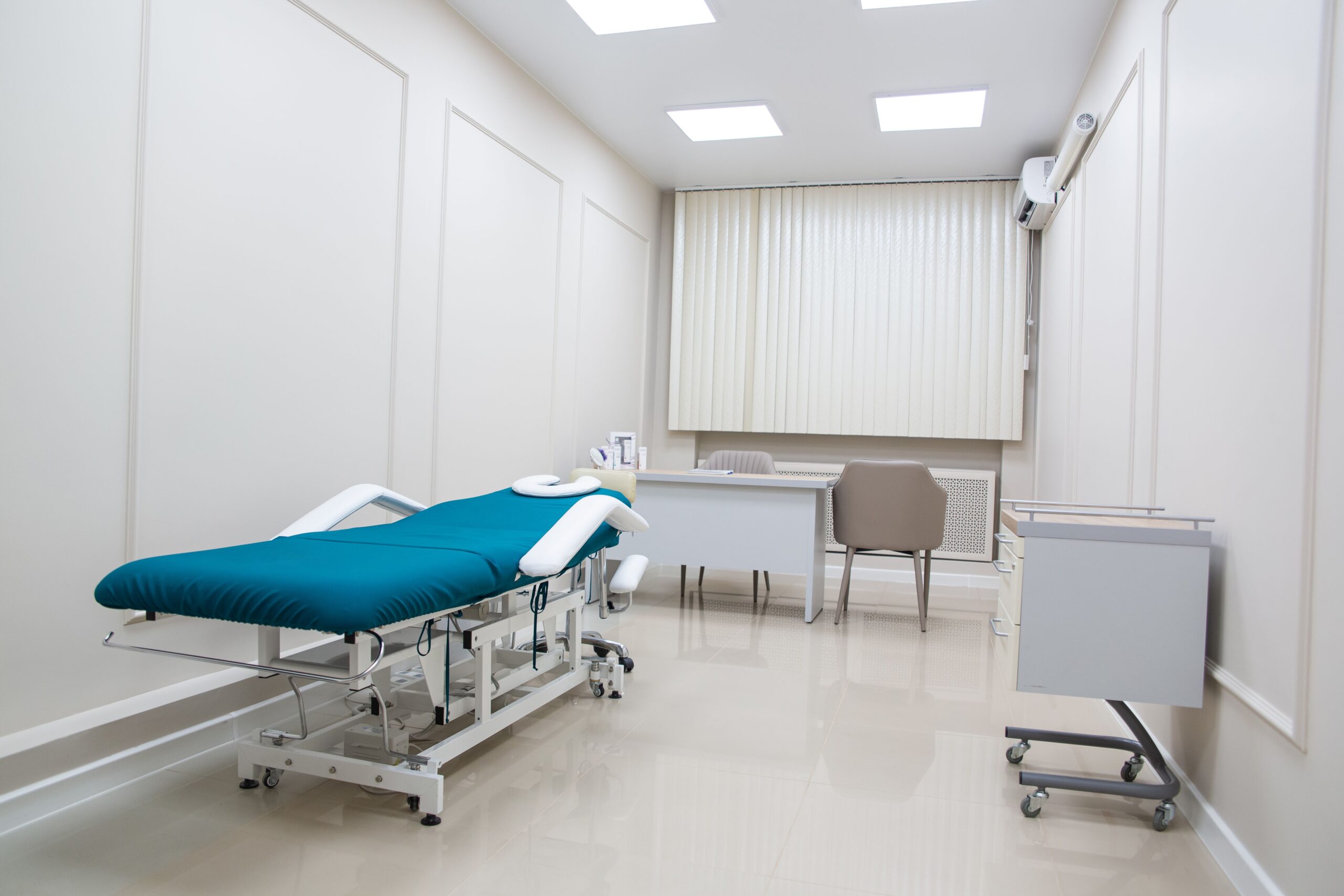
How can air cleaning support infection control in medical and dental clinics?
22 July 2026
Key points
- Air cleaning can support infection control by reducing airborne particles and bioaerosols in treatment rooms, waiting areas and shared clinical spaces.
- It should complement, not replace, core infection prevention measures such as ventilation, source control, PPE, cleaning protocols, triage and procedure-specific controls.
- HEPA filtration can capture airborne particles; catalytic or gas-phase technologies can address selected gaseous pollutants, depending on test evidence.
- Dental clinics need particular attention because aerosol-generating procedures can increase airborne particle loads.
- Real-world performance depends on room size, CADR, placement, airflow, occupancy, maintenance and whether staff operate the device consistently.
Introduction
Medical and dental clinics manage indoor air differently from ordinary commercial buildings. Occupants may include people with respiratory symptoms, vulnerable patients, clinical staff, carers and members of the public. Activities can also generate aerosols, disturb settled dust, release cleaning-related VOCs, or increase the microbial load in the air.
Air cleaning can play a useful role in this setting. It can reduce airborne particles in a room, and under suitable conditions, it may reduce measurable bioaerosol levels. That does not mean an air cleaner “prevents infection” by itself. Infection control depends on a layered system: clinical protocols, ventilation, filtration, PPE, hand hygiene, cleaning, patient flow and maintenance all interact.
Public health and healthcare guidance now treat ventilation and air cleaning as part of that wider environmental control framework. NHS England describes ventilation as an important line of defence for infection control in healthcare environments, while its HEPA guidance explains how portable and semi-fixed air cleaning devices can supplement ventilation in healthcare and patient-related spaces.
Why does air quality matter in medical and dental clinics?
Clinical spaces can contain several airborne contaminant types at the same time.
These include:
- respiratory particles from breathing, speaking, coughing and sneezing;
- aerosols generated by dental or medical procedures;
- airborne bacteria, fungi and other bioaerosols;
- fine particulate matter from outdoor air or indoor activity;
- VOCs from cleaning products, materials or clinical processes;
- odours and gases that require ventilation or source control.
The CDC notes that respiratory infections can be acquired from exposure to pathogens contained in droplets or droplet nuclei, and healthcare environments must manage air as part of environmental infection control.
Dental clinics have an additional issue. Aerosol-generating procedures can produce small particles, and guidance from the Scottish Dental Clinical Effectiveness Programme describes AGPs as a relevant concern because particles can remain in treatment rooms after a procedure.
The technical challenge is therefore not just “cleaning the air”. The clinic needs to control several pathways at once: source generation, dilution, removal, filtration, deposition and re-entry after treatment.
What role can air cleaning play in infection control?
Air cleaning reduces airborne contaminant concentrations by moving room air through a treatment system.
In a HEPA-based device, the fan draws air into the unit, the filter captures particles, and the unit returns filtered air to the room. If the device includes additional media, such as activated carbon or catalytic technology, it may also address selected gases or VOCs, depending on the design and test evidence.
The infection-control role is clearest for airborne particles and bioaerosols. Portable HEPA devices can increase the effective clean air rate in a room without major ductwork changes. CDC/NIOSH guidance recommends portable or built-in HEPA fan-filtration systems as one way to improve air cleanliness, especially in higher-risk areas such as medical offices.
A scoping review in the Journal of Hospital Infection found growing interest in portable air cleaners in healthcare settings, but it also identified variation in study methods and outcomes. That matters because evidence can show reductions in particles or microbes without proving a universal reduction in infections across all clinical settings.
So the most accurate claim is this: air cleaning can help reduce airborne contaminant levels when devices are correctly selected, placed, operated and maintained. It should support infection prevention rather than act as a standalone infection-control intervention.
How does this apply to dental aerosol-generating procedures?
Dental settings need careful airflow management because some procedures generate aerosols close to the patient and clinician. High-speed instruments, ultrasonic scalers and air-water syringes can add particles to the room air. Suction, rubber dam use, pre-procedural measures, PPE, ventilation and air cleaning all form part of a layered approach.
A systematic review on interventions to reduce aerosols in dental environments found that high-volume evacuation has demonstrated effectiveness, while HEPA filters and several air cleaning systems show promising results. The authors also emphasised the need for more clinical evidence before overgeneralising results.
Another dental review noted that ventilation and filtration can help limit aerosol spread in operatories when teams combine them with other controls such as high-volume evacuation, rubber dam use and appropriate PPE.
This layered framing matters for dental teams. A portable air cleaner should not replace chairside aerosol control. It should reduce the residual airborne load in the room and support faster removal of particles after generation, especially where mechanical ventilation cannot easily be improved.
What does the HATL dental case study show?
The Commonwealth Dental Practice case study reports that HA500 and HA800 units were installed in treatment rooms in a Scottish dental chain during the pandemic. The case study describes the context as aerosol-generating procedures and the need to work within ventilation-related requirements, including the commonly referenced 10 air changes per hour level for dental treatment rooms.
The reported outcome states that the units exceeded the 10 ACH guideline used in the case study and helped the practice manage AGP-related workflow and waiting times. It also includes a statement from dentist Patrick Balmer, who said the units gave the practice the ability to perform AGPs and provided “safety combined with peace of mind” for staff and patients.
This case study supports the operational value of adding air cleaning in dental treatment rooms under the stated conditions. It does not prove that every dental clinic can reduce fallow time by the same amount, nor does it prove a direct reduction in infection rates. Room volume, existing ventilation, door use, procedure type, suction, purifier CADR, placement and local protocols all affect the outcome.
What does the HATL medical practice study show?
The MTIF study gives a more measured field example because it collected air samples in a real clinical setting.
The Medical Technologies Innovation Facility at Nottingham Trent University conducted the testing at Sunrise Medical Practice in Nottingham. The study aimed to assess whether HATL air purifiers reduced bacteria and mould levels in a clinical setting over a 10-day period. It collected 46 air samples across background, device-testing and post-device periods, using Fisher Scientific growth media incubated at 32°C for two to four days.
The results reported approximate reductions in bacteria and mould of 68% in the practice room and 36% in the corridor/waiting room during the device-testing period. The study also reported mould reductions of 73% in the practice room and 38% in the corridor/waiting room.
The discussion is useful because it does not treat the building as a simple test chamber. It notes that the practice room showed stronger reductions, probably because it had fewer environmental disturbances. The corridor and waiting room had higher foot traffic, more door opening, less controlled ventilation and suboptimal purifier placement due to socket limitations.
That distinction is important for clinic managers. Air cleaning can reduce measured airborne microbial levels, but room use and placement can materially change the result.
What about hospitals and higher-risk clinical spaces?
Medical and dental clinics often differ from hospital isolation rooms, operating theatres and specialist departments. Still, hospital guidance helps establish a useful technical boundary.
NHS England’s HEPA guidance applies to healthcare spaces with ventilation requirements and sets out standards for portable and semi-fixed HEPA devices. It frames these devices as a way to improve or supplement ventilation, not as a casual substitute for specialist ventilation design.
A study in a legacy hospital ward found that portable HEPA filtration increased clearance of respirable-size pollutant aerosols compared with natural ventilation alone and reduced spatial variation in particle persistence. The authors also found that natural ventilation plus portable air filtration performed better than either intervention alone.
HATL’s Lille University Hospital case study reports that a HA800 unit was used in surgeries and that the reported waiting time between surgeries reduced from three hours to 13 minutes under the project conditions. The case study also states that the hospital later used HA800 units in areas including dental surgery, haematology rooms for immunocompromised patients and IVF-related spaces after reviewing performance information.
That case study should be read as an operational example, not as a universal clinical rule. Specialist spaces need local validation, infection-control input and estates review before teams change turnaround times, room use or ventilation assumptions.
How should clinics choose air cleaning technology?
Clinics should start with the problem they need to manage.
For airborne particles and bioaerosols, HEPA filtration has the clearest role because it physically captures particles from the air passing through the device. For VOCs, odours or chemical pollutants, clinics need technology that targets gases rather than particles. That may involve activated carbon, catalytic media or other validated gas-phase treatment approaches.
Healthy Air Technology uses HEPA filtration with D-orbital nano oxide (DNO) catalytic technology. The intended roles are complementary: HEPA media captures particles, while DNO catalytic technology is designed to address selected gaseous pollutants through surface-based catalytic processes.
For clinical communication, avoid collapsing these mechanisms into one broad claim. A stronger explanation is:
HEPA filtration supports particle and bioaerosol reduction. DNO catalytic technology broadens the treatment approach for selected gaseous pollutants. The combined system should be assessed through relevant laboratory data, field measurements, airflow design, by-product considerations and maintenance practice.
The CDC and EPA both frame air cleaning as one part of a broader indoor-air strategy. EPA guidance for respiratory viruses recommends a suite of building and IAQ measures rather than a single intervention.
What specification factors matter most?
A clinic should not select an air cleaner by filter label alone.
The main specification factors are:
- Clean Air Delivery Rate at the fan speed staff will actually use;
- room volume and required equivalent air changes;
- filtration efficiency and technology type;
- evidence for particle, bioaerosol or gas-phase performance;
- noise level during consultations and procedures;
- airflow direction and placement constraints;
- maintenance intervals and filter replacement process;
- by-product data, especially for ionisation, plasma, UV/PCO or catalytic systems;
- electrical safety, infection-control compatibility and cleaning access.
NHS England’s HEPA guidance sets basic standards for devices used in healthcare and patient-related settings, including considerations around performance, installation, operation and maintenance.
Placement deserves particular attention. The MTIF study found lower reductions in the corridor/waiting room partly because socket limitations led to suboptimal placement and reduced airflow efficiency. This is a useful reminder: the best device on paper may underperform if the room layout prevents good air movement.
Where should clinics place air cleaners?
Air cleaners need clear air paths. The unit must draw room air in, process it, and return cleaned air to the occupied zone without immediate short-circuiting.
In medical consultation rooms, place the unit where it can serve the room without blowing strongly from one person’s breathing zone toward another. Keep the inlet and outlet clear of chairs, couches, curtains, cabinets and clinical trolleys.
In dental treatment rooms, consider the procedure area, clinician position, suction arrangement, existing supply and extract points, and the likely aerosol pathway. The device should support room clearance and mixing without disrupting local controls such as high-volume evacuation.
In waiting rooms and corridors, one unit near a wall socket may not cover the space well. Higher foot traffic, open doors and variable occupancy can reduce measurable impact, as the MTIF findings suggest. Larger or irregular spaces may need multiple units or a semi-fixed installation plan.
A good placement review should ask:
- Does the device clean the room people actually occupy?
- Does furniture block intake or discharge airflow?
- Does the outlet help mix the room without creating discomfort?
- Does the purifier work with, rather than against, existing ventilation?
- Can staff access the unit for cleaning and maintenance?
- Will the device run during the full occupied period?
How should air cleaning fit into infection-control protocols?
Air cleaning works best when it sits inside a documented infection-control process.
For clinics, that process may include:
- triage and appointment scheduling;
- source control for symptomatic patients where relevant;
- procedure-specific controls, such as high-volume evacuation in dentistry;
- ventilation assessment;
- air cleaning sized to room volume and risk;
- PPE and respiratory protection where required;
- cleaning and decontamination protocols;
- filter maintenance records;
- monitoring of CO₂, PM2.5 or microbial indicators where appropriate;
- review after changes to room use, occupancy or equipment.
WHO’s ventilation roadmap for indoor spaces emphasises the need to assess ventilation, reach appropriate ventilation levels and improve indoor air quality to reduce the risk of respiratory infection spread indoors.
That does not mean every small clinic needs complex modelling. It does mean teams should avoid informal decisions such as “we bought an air purifier, therefore the room is safe.” The better approach is to document what the device contributes and which risks it does not address.
What should clinics avoid claiming?
Clinics should avoid statements that overreach the evidence.
Avoid:
- “This air purifier prevents infection.”
- “This device makes the room safe.”
- “Air cleaning replaces PPE.”
- “Air cleaning eliminates fallow time in every dental room.”
- “The unit destroys all pathogens instantly.”
- “The same result applies in every clinic.”
Use more accurate wording:
- “The device can help reduce airborne particle concentrations.”
- “Measured microbial reductions were observed under the study conditions.”
- “Air cleaning can supplement ventilation and infection-control protocols.”
- “Performance depends on room size, airflow, placement, maintenance and occupancy.”
- “Any change to clinical workflow should follow local risk assessment and guidance.”
This protects scientific credibility. It also helps clinicians, practice managers and facilities teams make better decisions.
What should clinics measure after installation?
A clinic can learn a great deal from basic post-installation checks.
CO₂ monitoring helps assess ventilation adequacy in occupied rooms. Air cleaners generally do not remove CO₂, so a low particle count does not prove that outdoor air ventilation is adequate.
PM2.5 monitoring can indicate whether particle levels fall when the purifier runs, although it will not identify whether particles are biological.
Microbial air sampling can help in specific studies or high-interest settings, but it requires appropriate methods and interpretation. The MTIF study used culture-based sampling and reported colony-forming units per cubic metre, which allowed comparison across background, device-operation and post-device periods.
Maintenance records matter too. Filters load over time. Catalytic or gas-phase media can also change with use. A device that worked well at installation may lose performance if teams ignore filter replacement, airflow obstruction or operating speed.
Summary
Air cleaning can support infection control in medical and dental clinics by reducing airborne particles and, under appropriate conditions, measurable bioaerosol levels. It has particular relevance in treatment rooms, dental operatories, waiting areas and older clinical spaces where ventilation upgrades may take time.
The evidence supports a layered interpretation. HEPA filtration and well-designed portable air cleaners can improve air cleanliness, and several healthcare and dental studies show reductions in aerosols, particles or microbial indicators. However, air cleaning does not replace clinical infection-control procedures, ventilation, PPE, source control or local risk assessment.
HATL’s medical and dental case studies show useful real-world patterns. The MTIF study reported stronger microbial reductions in a controlled practice room than in a busier corridor/waiting area, highlighting the role of foot traffic, ventilation dynamics and placement. The Commonwealth Dental Practice and Lille University Hospital case studies show how HA500 and HA800 units have supported clinical workflows under specific project conditions.
For clinic managers, the conclusion is measured but useful: air cleaning can form a valuable part of infection-control strategy when teams size, place, operate, maintain and monitor devices correctly.
Latest News
How can air cleaning support infection control in medical and dental clinics?
Key points Air cleaning can support infection control by reducing airborne particles and bioaerosols in treatment rooms, waiting…
Where should you place air purifiers in a room for best performance?
Key points Air purifier placement affects how well a unit draws polluted air in and distributes cleaned air…
Can portable air cleaners help you reduce reliance on outdoor air ventilation?
Key points Portable air cleaners can add recirculated clean air to a room, which may reduce the need…