

What are the main indoor air pollutants in modern buildings?
21 January 2026
Key points
- Indoor air pollutants in modern buildings are typically a mixture of particles, gases, vapours and bioaerosols from both indoor and outdoor sources.
- The main pollutant groups are: particulate matter (PM), volatile organic compounds (VOCs), combustion-related gases (e.g. NOₓ, SOₓ, CO, ozone) and biological particles (bacteria, viruses, mould, pollen).
- Everyday activities such as cooking, cleaning, printing, building maintenance and normal occupancy all contribute to indoor pollution loads.
- Measurements in real buildings commonly track PM₂.₅, PM₁₀, TVOCs, CO₂ and, in more detailed studies, specific gases such as NO₂ and SO₂ and airborne microbes.
- Understanding these pollutant groups is the first step towards designing effective ventilation, filtration and air cleaning strategies.
Indoor air quality contains a fairly well-defined set of pollutants that can be described and measured.
This article sets out the main pollutant groups found in homes, offices, clinics and public buildings, where they come from, and how they are typically monitored in practice. It also notes how these pollutants appear in Healthy Air Technology’s own laboratory and field studies.
If you are new to the topic, start with our overview of what indoor air quality (IAQ) means in buildings.
What types of particulate matter are found indoors?
Fine and coarse particles
Particulate matter (PM) is a broad term for solid and liquid particles suspended in air. The most commonly referenced fractions are:
- PM₁₀ – particles with aerodynamic diameter up to 10 µm
- PM₂.₅ – particles up to 2.5 µm
- Ultrafine particles – below 0.1 µm
Indoors, these come from:
- Outdoor air (traffic, industry, combustion) entering via ventilation or infiltration
- Resuspended dust from floors, furniture and textiles
- Cooking (especially frying, grilling and toasting)
- Printers, copiers and some office equipment
- Construction, refurbishment and maintenance activities
Why PM₂.₅ receives particular attention
PM₂.₅ particles remain airborne for long periods and can travel throughout a building. From an engineering point of view they are important because they can bypass simple filters and require high-efficiency media (e.g. HEPA-class filters) to remove. From a health viewpoint they are particularly dangerous as they can enter the bloodstream and impact the function of internal organs.
What are volatile organic compounds (VOCs) and where do they come from?
Defining VOCs
Volatile organic compounds (VOCs) are carbon-based chemicals that evaporate at room temperature. They form a large family of substances with widely varying properties, but they share one feature: they can exist as gases or vapours in indoor air.
Examples include:
- Solvent vapours from paints, varnishes and adhesives
- Formaldehyde and other aldehydes from building products and furniture
- Fragrances and solvents from cleaning and personal-care products
- Emissions from printers, copiers and some plastics
Because it is impractical to measure every individual compound in routine monitoring, many instruments report total VOC (TVOC) as a single aggregated value.
Common indoor sources
Typical VOC sources in modern buildings include:
- Building and fit-out materials – chipboard, MDF, flooring, sealants, coatings
- Furnishings – desks, chairs, carpets, soft furnishings
- Cleaning and disinfection products – sprays, wipes, floor treatments
- Occupant-related sources – perfumes, deodorants, personal care
- Equipment – laser printers, copiers, some electronics and 3D printers
Which combustion-related gases appear in indoor air?
Nitrogen oxides (NOₓ) and sulphur oxides (SOₓ)
Nitrogen oxides (NOₓ) and sulphur oxides (SOₓ) are groups of gases associated with combustion. Indoors, they may come from:
- Outdoor traffic and combustion sources entering via ventilation
- Gas stoves and ovens
- Some industrial or specialised processes
- Inadequately flued heaters or appliances
Carbon monoxide (CO) and hydrogen sulphide (H₂S)
Carbon monoxide (CO) and hydrogen sulphide (H₂S) gases are less common in well-designed and maintained buildings but are important from a safety and odour perspective where they do arise.
Ozone (O₃)
Ozone is usually thought of as an outdoor pollutant, but it can also be:
- Introduced via outdoor air in certain locations; or
- Generated indoors by some electronic devices and by certain types of air “disinfector” that inadvertently produce ozone.
What are bioaerosols and how do they behave indoors?
Defining bioaerosols
Bioaerosols are airborne particles of biological origin, including:
- Bacteria
- Viruses
- Fungal spores and fragments
- Pollen and other biological material
They can be present as single cells or particles, as part of larger droplets, or attached to dust.
Sources include:
- Occupants (breathing, talking, coughing, sneezing)
- Outdoor air (pollen, spores, microbes)
- Damp building elements (mould growth)
- Surfaces and materials that periodically shed biological particles
Bioaerosols in Healthy Air studies
The DNO catalyst paper highlights the removal or deactivation of:
- Bacteria
- Viruses (specifically mentioning influenza A/H1N1)
- Pollen
In practical case studies:
- General practice and dental clinics – air sampling has shown reductions in viable airborne bacteria in treatment rooms and adjacent areas when air purifiers are in operation, with levels rising again when devices are removed.
- Hospitals and residential settings – portable units have been deployed as an additional line of defence to reduce airborne microbial load in specific rooms or zones.
In these cases, the focus is on capturing and inactivating bioaerosols via filtration and catalytic surfaces, rather than relying on chemical sprays or gases.
Are CO₂ and humidity considered pollutants?
Carbon dioxide (CO₂) as an indicator
CO₂ is not usually described as a “pollutant” in the same way as VOCs or PM, but it is a useful indicator of indoor conditions:
- It is generated mainly by occupants through breathing.
- Elevated indoor CO₂ levels generally reflect inadequate ventilation relative to occupancy.
Modern buildings often use CO₂ monitoring to:
- Control ventilation rates
- Diagnose under-ventilated rooms
- Provide a simple proxy for how quickly exhaled air is removed or diluted
Temperature and relative humidity
Temperature and humidity are not pollutants, but they significantly influence:
- Perceived comfort
- Formation of condensation and mould
- Survival and behaviour of bioaerosols
As a result, they are typically measured alongside pollutant concentrations when assessing indoor air quality.
How are these pollutants measured in real buildings?
In practice, different pollutants are measured using different tools:
- PM₂.₅, PM₁₀ – particulate sensors.
- TVOC, NO₂, SO₂, O₃, etc – gas sensors
- CO₂, temperature, relative humidity – widely available IAQ sensors
- Bioaerosols – culture-based air sampling, surface swabs or molecular techniques
Healthy Air field deployments typically combine:
- Continuous monitoring for particles, TVOCs and comfort parameters, and
- Periodic microbiological sampling in clinics and other sensitive environments.
This combination allows both quantitative tracking of general pollution levels and direct observation of changes in airborne microbes when systems are turned on or off.
What are the practical implications for building owners and operators?
Understanding the main pollutant groups helps to structure decisions about monitoring and control:
- Identify which pollutants are likely to matter most in your context
- Traffic-heavy location: focus on PM and NO₂/NOₓ.
- Recently refurbished interiors: pay close attention to VOCs and odours.
- Healthcare or high-occupancy spaces: consider bioaerosols and CO₂ as well as PM.
- Match measurement methods to the pollutants of interest
- Use PM and TVOC sensors plus CO₂, temperature and RH as a basic IAQ “dashboard”.
- Add targeted gas monitoring (e.g. NO₂, O₃) where relevant.
- Use microbiological sampling when airborne microbes are a priority.
- Choose control strategies that address the full pollutant mix
- Source control for VOCs and dust where possible.
- Ventilation to dilute and remove pollutants with outdoor air.
- Filtration and catalytic air cleaning to remove particles, gases and bioaerosols already indoors.
- Consider by-products and secondary pollution
- When assessing technologies, look not only at what they remove but also at whether they generate new pollutants (e.g. ozone, NOₓ, fragmented VOCs) in the process.
- Favour approaches that confine reactive chemistry to solid surfaces rather than the bulk room air.
By viewing indoor air in terms of these pollutant groups, it becomes easier to design monitoring programmes, select appropriate technologies and interpret the results of both laboratory tests and real-world case studies.
For a UK building-services perspective, the Building Engineering Services Association’s Indoor Air Quality focus area summarises how ventilation and IAQ are treated in building practice.
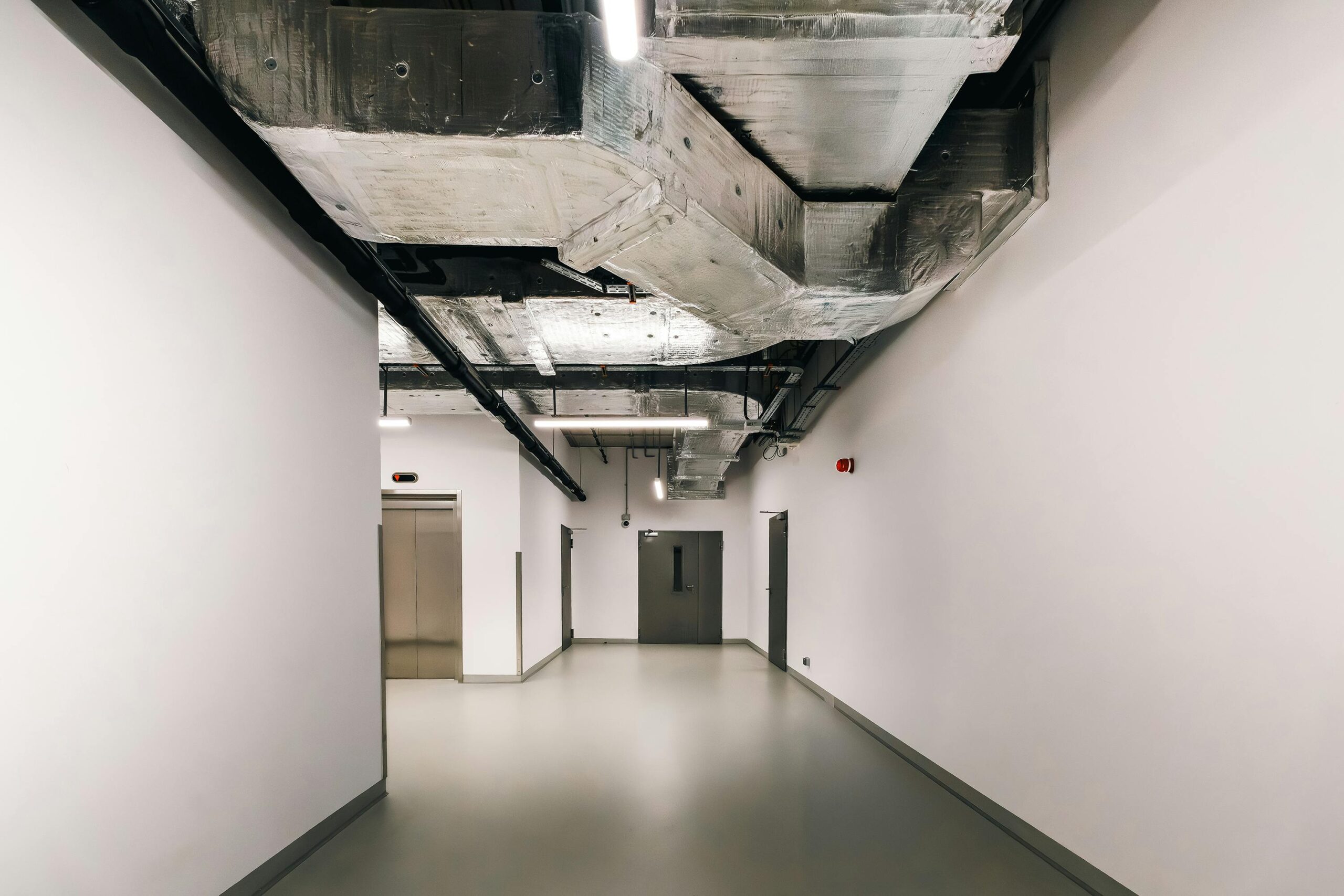
Photo by Jakub Zerdzicki: https://www.pexels.com/photo/industrial-interior-with-exposed-hvac-ductwork-30749458/.
Latest News
What are the main indoor air pollutants in modern buildings?
Key points Indoor air pollutants in modern buildings are typically a mixture of particles, gases, vapours and bioaerosols…

What is indoor air quality and why does it matter for buildings?
Key points Indoor air quality (IAQ) describes the chemical, particulate, biological and physical characteristics of the air inside…

The Hidden Risk of Clean Air: Secondary Pollution from Air Purifiers
When most people think of improving indoor air quality, air purifiers often come to mind as a simple…