


Understanding Air Purifier Area Calculation Methods for International Standards
17 March 2023
This article aids the understanding of air purifier area calculation methods for international standards.
Method Origins
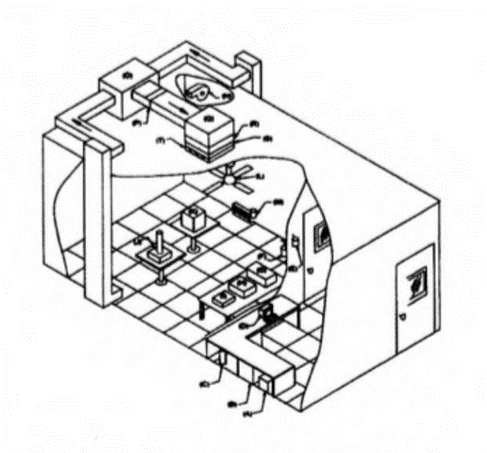
The area calculation methods for air purifiers are based on two international standards: ANSI/AHAM AC-1-2006 and IEC/PAS 62587-2008. Both methods are grounded in room building construction standards and use cigarette smoke (0.1 μm-1.0 μm) as the test pollutant. AHAM stands for Association of Home Appliance Manufacturers, while IEC represents International Electrotechnical Commission.
Clean Air Delivery Rate (CADR)
To determine the appropriate area for an air purifier, we must first understand CADR, a core performance parameter of purifiers. CADR indicates the amount of clean air produced by the purifier per unit of time and remains constant regardless of test conditions. CADR is calculated using data from a closed test chamber, and the test is divided into two parts: natural attenuation and total attenuation. The change of pollutant concentration during the test follows the index law and can be represented by a specific equation. Different countries use different CADR units, such as cubic feet per minute (cfm) in the United States and cubic meters per hour (m3/h) in China.
Calculating the Applicable Area for Particulate Matter
The concentration of particulate matter in indoor air changes dynamically due to various sources and removal methods. When neither the source nor the removal effect changes rapidly, the indoor air particulate matter concentration is considered to reach a stable state. Using specific equations, the removal rate of an air purifier can be calculated. The AHAM Air Purifier Committee defines the steady state of air purification as reducing the initial concentration of particulate matter in the room to 20% or less, which means at least 80% sustained removal.
The standard calculation formula for the applicable area is:
Square feet = 1.55 × cubic feet per minute
This formula can be converted for use with other units. Using this formula, a purifier with CADR=50 cfm is suitable for a room of 78 ft2, while a purifier with CADR=100 is suitable for 156 ft2. The formula can also calculate the required CADR for a given room size or indoor space, such as 64 cfm for a 100 ft2 room.
About Healthy Air Technology
Healthy Air Technology, founded in Oxford, specialises in innovative technologies that eliminate harmful bacteria and viruses from the air. Dr. Chunli Cao, a chartered engineer with a PhD in Mechanical Engineering and over 20 years of experience, serves as the managing director. The company has developed some of the most advanced air purifiers on the market, winning a Red Dot Award for its design. The unique DNO Technology ensures air is filtered and released to a high standard of cleanliness. To learn more about Healthy Air Technology, please contact a team member.
Latest News
How can air purification improve air quality in offices and co-working spaces?
Key points Offices and co-working spaces often contain a mixed pollutant profile: outdoor particles, indoor dust, VOCs, bioaerosols,…
What a UK study reveals about indoor air triggers in asthma and COPD
Dust, smoke, cooking particles, fragrances, and mould were among the everyday indoor-air concerns identified by people with asthma and…

How can schools, universities and training centres use air cleaning effectively?
Key points Air cleaning can help reduce airborne particles in classrooms, lecture rooms, libraries, training rooms and shared…