

What a UK study reveals about indoor air triggers in asthma and COPD
8 September 2026
Dust, smoke, cooking particles, fragrances, and mould were among the everyday indoor-air concerns identified by people with asthma and chronic obstructive pulmonary disease (COPD) in a new UK study.
The findings highlight a gap between knowing that indoor air matters and understanding where pollutants come from or which actions are likely to help.
Indoor air quality is increasingly discussed as part of respiratory health, but the question remains: do people recognise the everyday activities and conditions that influence the air inside their homes?
What did the research find?
The open-access paper in Indoor Air, A Mixed Methods Study to Determine the Sources and Impact of Indoor Air Pollution in Patients With Chronic Respiratory Disease, offers useful insight into that question.
- The UK mixed-methods study surveyed 332 people with asthma or chronic obstructive pulmonary disease (COPD) and conducted 14 follow-up interviews.
- 90% of survey participants associated poor indoor air quality with shortness of breath and chest symptoms
- 84% associated it with increased coughing
-
Cost was the most frequently selected barrier to using an air filter or purifier, reported by 43% of respondents.
The study examined perceptions, reported experiences, and behaviour. It did not measure pollutant exposure or test whether changing indoor air quality improved their health.
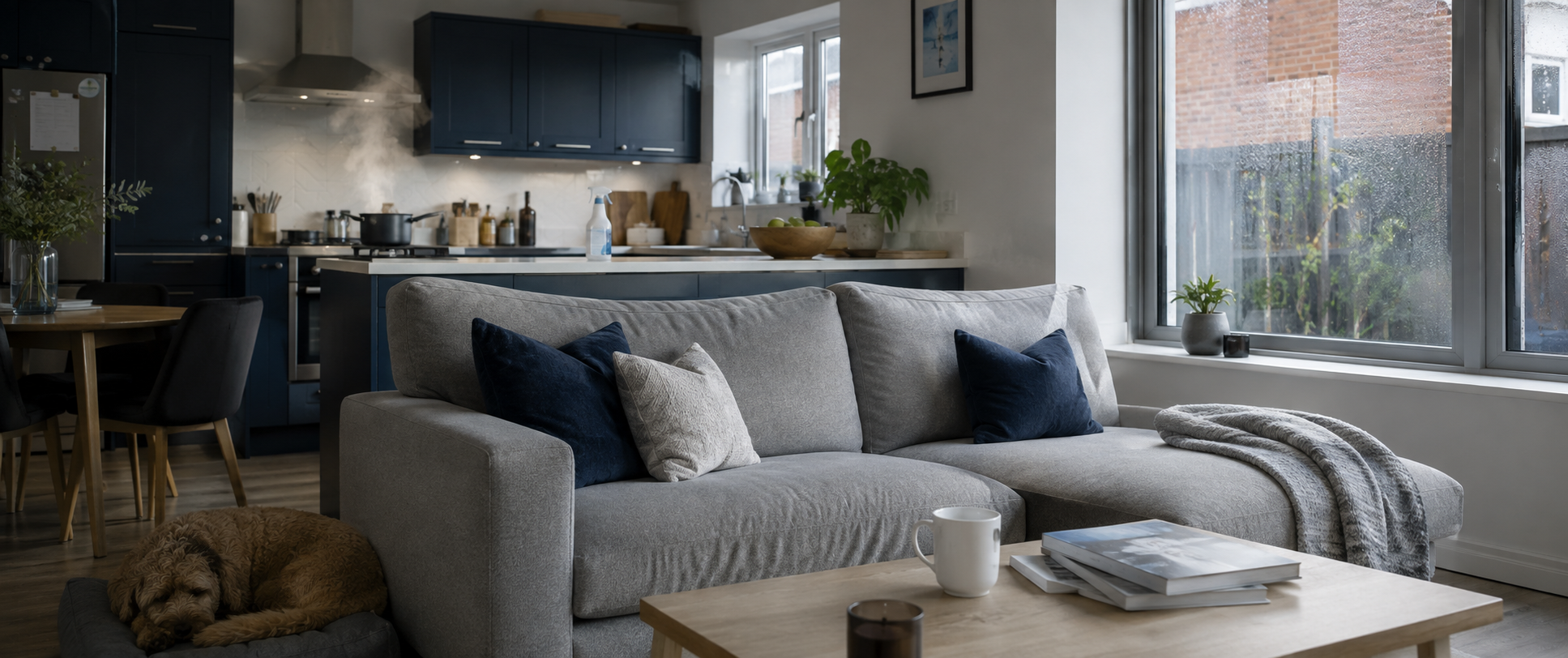
Everyday activities can change indoor air
The interviews identified a varied set of possible triggers and pollution sources, including:
- dust, damp and mould;
- pet hair;
- cleaning products and bleach;
- air fresheners, perfume, and other strong fragrances;
- candles, cigarette smoke, vaping, and wood fires;
- cooking particles; and
- smoke or traffic pollution entering from outside.
Humidity, cold weather, and changes in temperature also influenced how some participants felt and how they ventilated their homes.
The list illustrates why indoor air quality cannot be reduced to a single source or sensor reading. Its composition can change throughout the day according to cooking, cleaning, occupancy, ventilation, weather and outdoor pollution.
Some participants knew that a particular smell, activity, or environment affected them without necessarily identifying it as indoor air pollution. The study therefore points to a need for clearer guidance that connects specific sources with suitable responses.
Start with the source
The authors conclude that people with respiratory conditions may benefit from clearer, targeted indoor-air guidance as part of routine self-management.
The strongest approach is layered. No single measure can deal with every indoor-air issue.
Source control could include reducing smoke and candle use, cleaning dust carefully, choosing less fragranced products, and using lids and extraction while cooking. Damp and mould require particular care; they need the underlying moisture problem to be found and repaired. Filtration may capture some airborne particles or spores, but cannot fix a leak, condensation, or damaged building fabric.
Extraction and ventilation can remove pollutants and moisture close to where they are produced. Opening a window may help dilute pollution generated indoors, but it can also bring in traffic emissions or smoke. Weather, outdoor air quality, heating costs and the building itself all affect the choice.
For a broader explanation of how these controls work together, see: What is indoor air quality and why does it matter for buildings?
Where might an air purifier fit?
An appropriately selected air purifier can provide an additional layer of control, particularly where airborne particles are a concern or ventilation is difficult to improve.
The purifier must be suited to both the pollutant and the room. HEPA filtration is designed to capture particles, while gases and volatile organic compounds require other media or technologies supported by relevant test evidence. Airflow, room size, noise, positioning, filter replacement, and electricity use will all affect real-world performance.
There are also limits. Most portable air purifiers do not remove carbon dioxide or water vapour. They cannot replace the ventilation needed for occupied rooms or moisture control, and they are not a treatment for asthma or COPD.
Our article, Can portable air cleaners help reduce reliance on outdoor air ventilation?, discusses these distinctions in more detail.
Cost is part of the indoor-air challenge
When survey participants were asked about barriers to using filters or purifiers, 43% selected cost.
The result does not reveal what people would pay or whether they want finance or subscription options. It does expose a weakness in many indoor-air conversations: recommending technology without discussing purchase price, electricity, replacement filters, and maintenance.
Manufacturers and suppliers can help by providing clear room-sizing information, transparent operating costs, accessible maintenance instructions, and evidence linked to the pollutants a product is intended to address.
Technology alone cannot solve problems rooted in poor housing, damp, overcrowding or high outdoor pollution. Landlords, housing providers, building owners and public-health bodies also have a role where residents cannot address the source themselves.
What does the study not show?
The research offers valuable insight into what people with asthma and COPD notice in their homes and the barriers they face. However:
- the findings were based on self-reported perceptions and behaviour;
- pollutant concentrations were not measured; and
- no purifier, ventilation system or other intervention was tested.
Those limits do not make the findings less interesting. They tell us what the paper is best used for: understanding the questions people have, the sources they notice, and the obstacles they face.
It also raises important questions for healthcare, housing, and the indoor-air industry:
- How can indoor-air guidance become a more useful part of respiratory education?
- What evidence should buyers expect when filtration is recommended?
- How can effective indoor-air measures remain accessible when cost and housing conditions limit people’s choices?
Healthy Air Technology was not involved in the Holt et al. study, and the paper did not test or endorse a HATL product. We are sharing it because it adds a valuable patient perspective to the wider discussion about practical indoor-air guidance.
Read the original open-access paper: A Mixed Methods Study to Determine the Sources and Impact of Indoor Air Pollution in Patients With Chronic Respiratory Disease
*This article is an educational summary and does not provide medical advice. People concerned about respiratory symptoms should seek advice from an appropriate healthcare professional.
Latest News
What a UK study reveals about indoor air triggers in asthma and COPD
Dust, smoke, cooking particles, fragrances, and mould were among the everyday indoor-air concerns identified by people with asthma and…

How can schools, universities and training centres use air cleaning effectively?
Key points Air cleaning can help reduce airborne particles in classrooms, lecture rooms, libraries, training rooms and shared…
What did our general practice and dental clinic case studies show about airborne microbes?
Key points The general practice study measured airborne bacteria and mould before, during and after air purifier operation…